
Living with Fire
Ecological
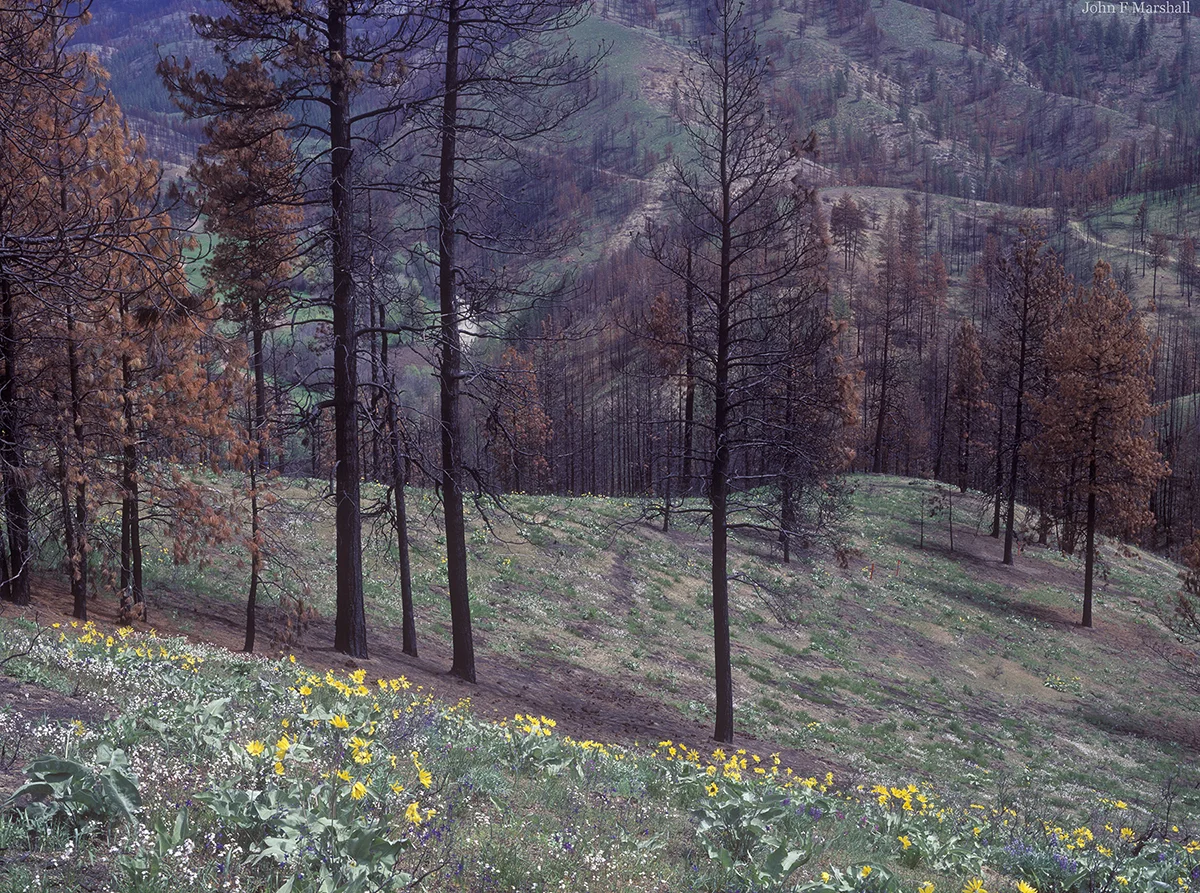

Fire has shaped the landscapes of North Central Washington for thousands of years.
Today, many of our landscapes are out of balance. Decades of fire exclusion, combined with climate change, insect outbreaks, and disease, have increased forest density and fuel loads. Reintroducing fire—both through prescribed burning and fire-informed forest management—is one of the most effective tools we have to restore ecological function and build long-term resilience across our region.
Why Our Region Needs Fire
A Fire-Adapted Landscape
Much of North Central Washington is naturally fire-adapted. Dry forests dominated by ponderosa pine, Douglas-fir, and mixed conifer ecosystems evolved alongside frequent fire. Many native plants depend on fire to thrive:
- Thick-barked trees like ponderosa pine are built to survive low-intensity burns
- Some species regenerate more successfully after fire resets the forest floor
- Many plants are able to survive fire as roots underground which then come back as strong sprouts nutritious for wildlife
Without fire, forests become overcrowded, stressed, and more vulnerable to insects, disease, and high-severity wildfire. Shrublands come to be dominated by old plants and dead wood, making them less useful for animals like deer and elk.
Fire doesn’t destroy ecosystems here—it maintains them.
Old Growth Forests & Fire Resilience
Old growth forests in Chelan and Douglas Counties are not dense, stagnant stands. Historically, they were open, diverse, and resilient, shaped by frequent fire and other disturbances that limited ladder fuels and promoted large, fire-resistant trees.
Recent research and collaborative work by the Washington Department of Natural Resources, the University of Washington, and the U.S. Forest Service highlights a key reality for Eastern Washington: Protecting old growth means actively managing fire risk.
Fire-resilient old growth forests:
- Are dominated by large, widely spaced trees
- Contain a mosaic of forest structures rather than uniform density
- Are less likely to experience stand-replacing wildfire
When fire is excluded, even old growth forests can become vulnerable. Stewardship-focused management—paired with prescribed fire—helps protect these irreplaceable ecosystems for future generations.
Individuals, Clumps, and Openings (ICO)
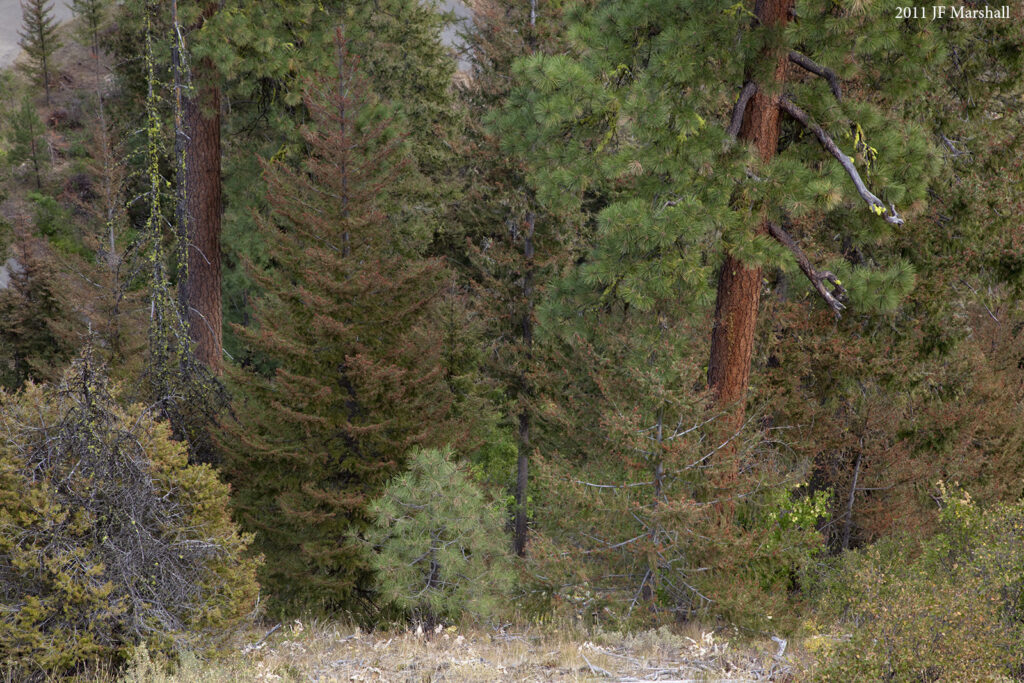
Historically, fire shaped forests into a patchwork pattern known as Individuals, Clumps, and Openings (ICO):
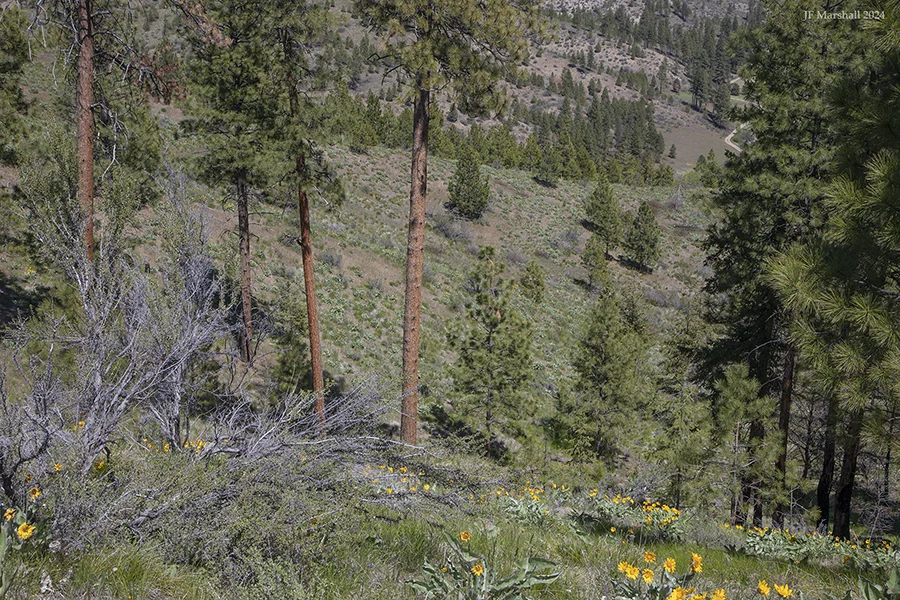
Individuals
Individual trees standing alone
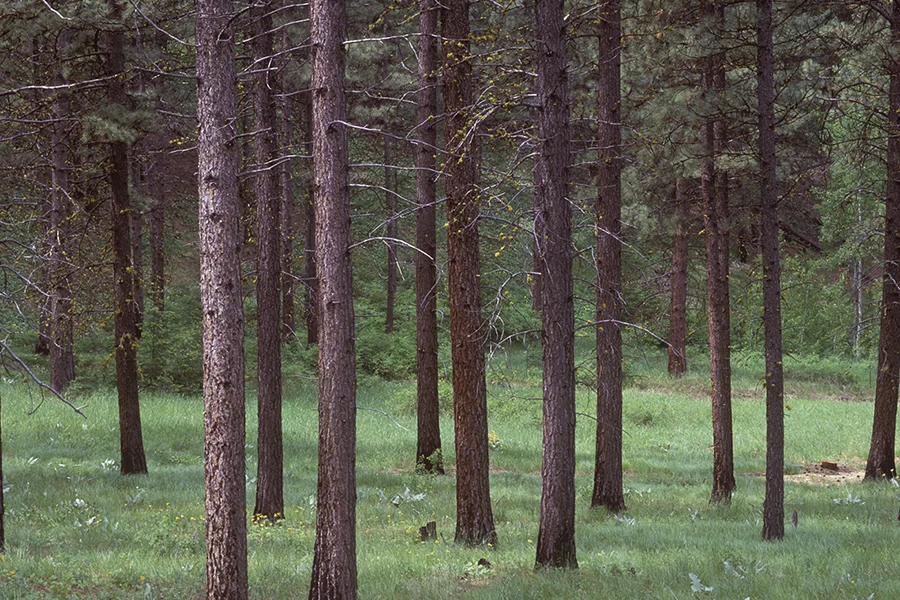
Clumps
Small clumps of trees grouped together
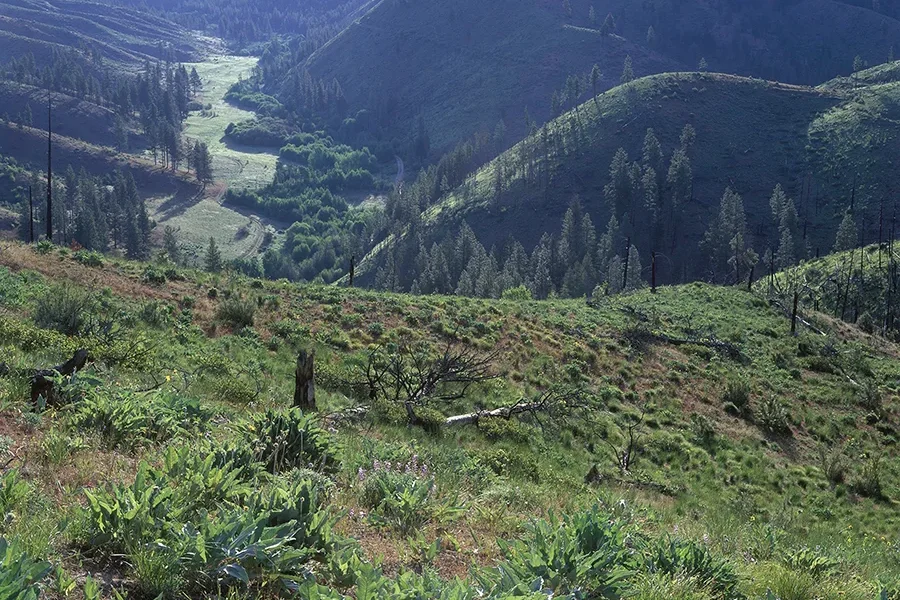
Openings
Open spaces with grasses, shrubs, and wildflowers
Credit: John Marshall
This spatial diversity reduced fire intensity, slowed fire spread, and supported wildlife habitat. Modern forest management in Chelan and Douglas Counties increasingly uses the ICO approach to mimic natural fire patterns, restoring forests to a structure that can better coexist with fire rather than be devastated by it.
ICO isn’t about removing forests—it’s about restoring balance.
Forest Health:
Insects, Disease, and Fire
Fire suppression doesn’t just increase wildfire risk—it weakens forest health.
Across the Eastern Cascades and into Chelan County, forests are experiencing:
- Insect outbreaks fueled by dense, stressed stands
- Diseases like white pine blister rust threatening keystone species
- Declining resilience to drought and warming temperatures
Fire of the right intensity helps interrupt these cycles by reducing competition, removing diseased material, and promoting stronger, more adaptive forests. In places like whitebark pine restoration areas in the North Cascades, fire-informed management is essential to sustaining high-elevation ecosystems critical to snowpack, water supply, and wildlife.
Fire, Adaptation, and Us
The ecosystems of North Central Washington are resilient because they adapt. Humans are no different.
Just as plants and forests have evolved alongside fire, our communities must adapt to a changing fire landscape—through stewardship, preparedness, and informed decision-making. Embracing fire as a natural and necessary force allows us to:
- Reduce the severity of future wildfires
- Protect homes, watersheds, and wildlife
- Maintain the ecological character of Chelan and Douglas Counties
Living with fire means learning from the land—and acting accordingly.
Wildfire NCW supports science-based stewardship that strengthens ecosystems and communities across Chelan and Douglas Counties. Learn how prescribed fire, forest restoration, and community planning work together to build a more resilient future.